

Hostinger vs Namecheap compared on pricing, renewals, WordPress, speed, support, backups, and long-term value. See which host fits your site and budget best..
Affiliate Disclosure: This article may contain affiliate links. If you buy through them, BestSaaSSpot may earn a commission at no extra cost to you. We only recommend tools and services we believe are worth considering based on research, product positioning, and buyer fit.
Table of Contents
Quick Verdict
If you want the simplest answer, Hostinger is the better choice for most beginners, bloggers, affiliate marketers, and small business owners.
It is usually easier to set up, easier to manage, and easier to recommend to someone launching a first or second site.
Namecheap is still a smart option for a narrower type of buyer. It makes more sense if you already use Namecheap for domains, prefer cPanel, or want to compare its shared hosting and EasyWP plans more selectively.
The real difference is not just price. It is how much value you get after the promo period, how easy the host feels day to day, and whether the platform matches your site type.
Hostinger vs Namecheap at a Glance
| Feature | Hostinger | Namecheap |
|---|---|---|
| Best for | Beginners, bloggers, affiliate sites, small business websites | Domain-first users, cPanel fans, simple shared hosting buyers |
| Shared hosting | Yes | Yes |
| WordPress hosting | Yes | Yes, including EasyWP |
| Cloud hosting | Yes | More limited positioning |
| VPS hosting | Yes | Yes |
| Control panel | hPanel | cPanel on shared hosting |
| Beginner friendliness | Strong | Good, but less streamlined |
| Pricing clarity | Clearer upfront | Can be more confusing across product lines |
| Renewal risk | High after promo term | Depends on product and billing structure |
| Backups | Included, varies by plan | Included on shared hosting |
| Migration | Free migration | Free migration |
| Best overall fit | Most first-time users | Users already comfortable with Namecheap ecosystem |
Why This Comparison Matters
The keyword hostinger vs namecheap attracts buyers who are close to making a decision.
They are not just looking for a list of features. They want to know which host is easier, which one has fewer surprises later, and which one is the better fit for their budget and goals.
That is where many comparison pages fall short. They often tell you who “wins,” but they do not explain the tradeoffs clearly enough.
This guide is built to help you choose with confidence.
How We Compared Hostinger and Namecheap
We compared both hosts using the things that matter most to decision-stage buyers:
Pricing and renewals
Introductory pricing is not the full story. A host can look cheap today and feel expensive later.
Ease of use
A beginner-friendly dashboard can save time, reduce setup mistakes, and make daily site management much easier.
Performance expectations
Most buyers want to know whether the host is fast enough, stable enough, and suitable for WordPress or a small business site.
Support and migration
Support matters most when something goes wrong. Migration also matters more than many buyers realize, especially if they plan to switch later.
Long-term value
This is where the real decision happens. The better host is not always the one with the lowest starting number. It is the one that gives you the best balance of cost, usability, and fit over time.
Hostinger Overview
Hostinger is built for buyers who want a modern, beginner-friendly hosting experience without spending much upfront.
It is especially appealing to first-time website owners, bloggers, affiliate marketers, freelancers, and small business users who want a host that feels simple from day one.
Best for
Hostinger is best for people who want an all-in-one hosting platform that is easy to start with and easy to grow with.
Main strengths
Hostinger stands out for its clean user experience, broad hosting lineup, WordPress-friendly positioning, and strong beginner fit.
It also does a better job than many low-cost hosts of making setup feel approachable.
Main weaknesses
Its biggest downside is renewal pricing. The cheapest plans usually look most attractive when you commit for a long term, but the renewal cost later is much higher.
That does not make Hostinger a bad value. It just means buyers need to look beyond the headline promo price.
Bottom line on Hostinger
Hostinger is the stronger all-around recommendation for most readers comparing these two brands.
Namecheap Overview
Namecheap is best known for domains, but it also offers shared hosting, WordPress hosting, VPS hosting, and other products.
For some buyers, that domain-first reputation is actually a plus. If you already manage your domains with Namecheap, keeping hosting in the same ecosystem may feel simpler.
Best for
Namecheap is best for buyers who already trust the brand, want cPanel on shared hosting, or prefer a domain-first company with hosting options attached.
Main strengths
Its strongest appeal is familiarity. Many users already know Namecheap as a domain provider, and shared hosting with cPanel feels familiar to a lot of buyers.
It can also be a reasonable choice for users who want to keep things simple and do not need the broader beginner-focused feel that Hostinger pushes.
Main weaknesses
The biggest issue is comparison clarity.
Namecheap’s hosting offer is not always as easy to compare because its shared hosting and EasyWP managed WordPress options can blur together for casual buyers. That makes it easier to compare the wrong products unless the article clearly separates them.
Bottom line on Namecheap
Namecheap is not a bad hosting provider. It is just a more selective recommendation.
Pricing Comparison
Pricing is one of the biggest reasons people search for hostinger vs namecheap.
At first glance, both look budget-friendly. That is exactly why this comparison can be confusing.
Hostinger tends to present aggressive introductory pricing more clearly. It often looks cheaper upfront, especially on long prepaid plans.
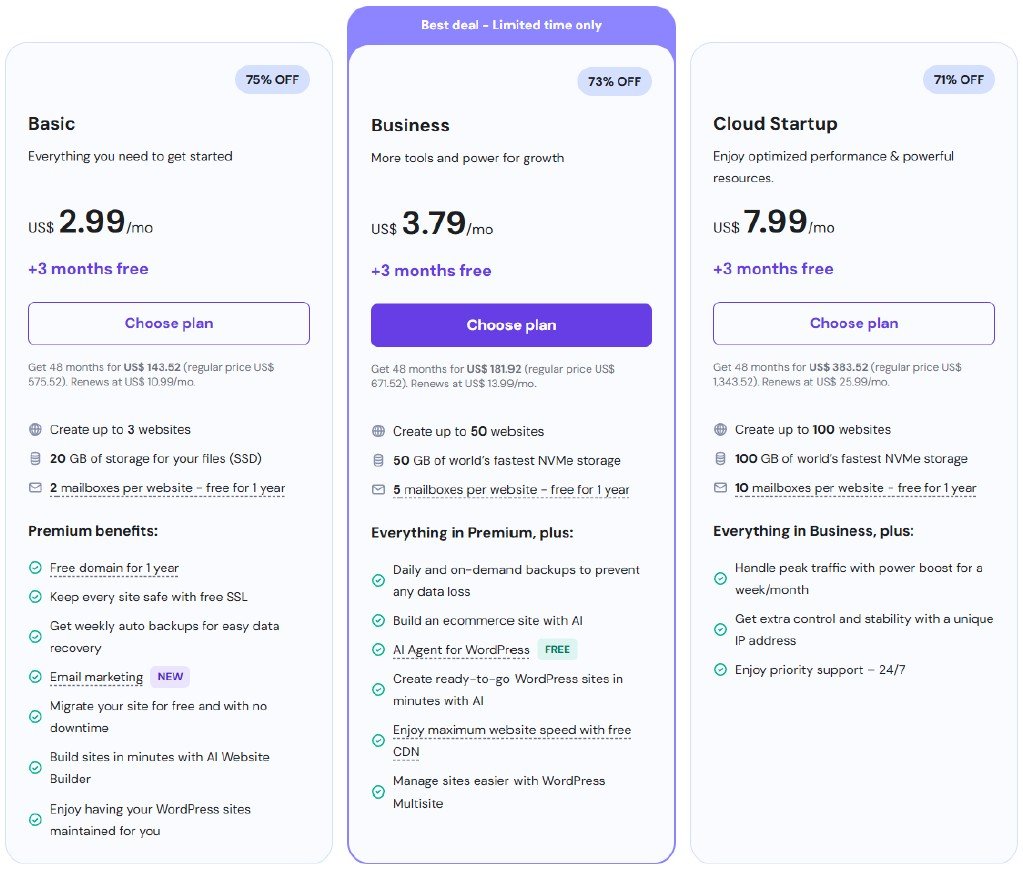
Namecheap can also look affordable, but the way its pricing is presented across shared hosting and EasyWP can make the comparison less straightforward.

What buyers should watch closely
The biggest mistake is comparing one host’s shared hosting promo against the other host’s managed WordPress pricing.
That creates a misleading comparison.
The second mistake is focusing only on the lowest visible monthly number. A hosting price only means something if you know:
- how long you have to commit to get it
- what the plan renews at
- what extras are included
- what you lose or pay more for later
Pricing takeaway
Hostinger usually wins on headline value and simplicity.
Namecheap can still make sense, but you need to compare the right product to the right product.
Renewal Pricing Comparison
This is where many hosting reviews become too generic.
Renewal pricing is one of the most important parts of the buying decision because that is where budget hosting can stop feeling like a bargain.
Hostinger’s low entry prices are attractive, but they usually depend on longer prepaid commitments. When the term ends, the renewal jump is noticeable.
Namecheap’s renewal story is different. It can be less about one big obvious jump and more about product-line confusion, billing structure differences, and not always being sure what the long-term monthly equivalent really is.
Why this matters
If you plan to keep your site for more than a year, renewal cost matters more than intro pricing.
A comparison article that ignores this is not helping the buyer enough.
Renewal pricing verdict
Hostinger is easier to understand, even if the renewal increase is bigger.
Namecheap requires more careful reading before checkout.
Ease of Use Comparison
Ease of use matters more than many buyers expect.
A host can have decent pricing and decent features, but still feel frustrating if the dashboard is messy, the setup process is unclear, or the control panel feels outdated.
Hostinger ease of use
Hostinger is generally easier for beginners.
Its dashboard is built to feel simple, modern, and less intimidating. That matters for buyers launching a first website, managing WordPress for the first time, or handling multiple small sites.
Namecheap ease of use
Namecheap has an advantage for users who specifically want cPanel.
For those buyers, familiarity matters. If you already know how cPanel works, Namecheap may feel more natural than Hostinger’s custom setup.
Ease of use verdict
For total beginners, Hostinger is the easier recommendation.
For cPanel users, Namecheap may feel more comfortable.
Performance Comparison
Most buyers searching this keyword are not looking for enterprise-grade infrastructure.
They want to know whether the host is good enough for a blog, a small business website, a niche site, a portfolio, or an affiliate project.
Hostinger performance positioning
Hostinger is usually positioned as the stronger all-around value option for performance on beginner and small business websites.
It is also easier to recommend to buyers who may want to move up later into stronger plans without changing providers.
Namecheap performance positioning
Namecheap can still handle smaller websites well, but its performance case is more situational.
It depends more on which product you choose and whether you are on shared hosting or a WordPress-specific product like EasyWP.
Performance verdict
For most general users, Hostinger feels like the safer performance recommendation.
For simpler sites or users already in the Namecheap ecosystem, Namecheap can still be enough.
WordPress Comparison
This is one of the most important sections in the entire article.
A lot of buyers searching hostinger vs namecheap hosting are really trying to answer a WordPress question.
Hostinger for WordPress
Hostinger is a strong choice for WordPress users who want an easy start, simple management, and a host that feels built around beginner growth.
It works especially well for bloggers, affiliate sites, content websites, and small business sites built on WordPress.
Namecheap for WordPress
Namecheap is more complicated here because buyers may choose either standard shared hosting or EasyWP.
That means the WordPress experience depends heavily on which path you take.
If you want a simpler managed WordPress route, EasyWP can be more relevant than Namecheap’s regular shared hosting plans.
WordPress verdict
Choose Hostinger if you want a stronger all-around beginner WordPress recommendation.
Choose Namecheap if you specifically want its WordPress product path and already like the brand.
Support Comparison
Support is one of the biggest emotional decision factors in hosting.
Buyers worry that the host will feel fine until something breaks. Then support becomes the whole product.
Hostinger support fit
Hostinger is usually the easier support recommendation for beginners because the whole platform is built around smoother onboarding and lower-friction management.
Namecheap support fit
Namecheap is still a valid support option, especially for users already familiar with its system or coming from a cPanel setup.
It can make more sense for migrations in that context.
Support verdict
Hostinger is the better general support recommendation for beginners.
Namecheap is more appealing for buyers who value cPanel familiarity or already know the platform.
Security and Backups Comparison
Security and backups are often overlooked until they become urgent.
That is why this section matters so much for buyer-intent satisfaction.
Hostinger security and backups
Hostinger includes the core features most small site owners expect, but backup frequency and plan-level benefits can vary depending on what you choose.
That means buyers should not assume every plan gives the same level of protection or convenience.
Namecheap security and backups
Namecheap also covers the basics well, and its shared hosting backup positioning is one of its stronger trust points.
Still, buyers should confirm exactly what is included on the plan they want rather than relying on a general marketing statement.
Security verdict
Both are credible for small and medium sites.
Hostinger feels stronger as part of a broader beginner hosting package, while Namecheap feels solid enough if the rest of its ecosystem fits you.
Domain and Email Comparison
This section is highly relevant because many buyers compare these brands with domain management in mind.
Hostinger domain and email fit
Hostinger is a stronger all-in-one option for buyers who want hosting, domain, and basic extras bundled in a simpler package.
Namecheap domain and email fit
Namecheap becomes more attractive if you already use it for domains and want to keep everything under one roof.
That convenience can matter, especially for buyers who dislike juggling multiple accounts.
Domain and email verdict
Hostinger is easier for buyers starting from scratch.
Namecheap is more appealing for existing Namecheap domain customers.
Hostinger Pros and Cons
Pros
Hostinger is easy to recommend because it combines low entry pricing, beginner-friendly setup, strong WordPress fit, and a broader hosting path for growth.
It feels like the more complete option for most first-time users.
Cons
The biggest issue is renewal pricing. The cheapest plans usually require a long commitment, and the jump later is real.
Some users also prefer cPanel, which Hostinger does not use.
Namecheap Pros and Cons
Pros
Namecheap benefits from strong brand recognition in domains, familiar cPanel hosting, and a setup that may feel natural for users already in its ecosystem.
It can also make sense for buyers who want a simpler, narrower hosting choice.
Cons
The biggest weakness is that the product comparison is not always clean.
Shared hosting and EasyWP can create confusion, which means buyers need to slow down and make sure they are comparing the right plans.
Who Should Choose Hostinger
Choose Hostinger if you are a beginner, blogger, affiliate marketer, freelancer, startup owner, or small business user who wants the easiest all-around path.
It is the better fit if you want simplicity, decent growth options, and a hosting platform that feels easier to live with over time.
It is also the better choice if you want a stronger default recommendation without needing to overthink the setup.
Who Should Choose Namecheap
Choose Namecheap if you already use Namecheap for domains and want to keep your hosting in the same ecosystem.
It also makes sense if you prefer cPanel and do not mind taking a more careful look at the specific product you are buying.
For some WordPress users, EasyWP may also make Namecheap more appealing than a basic shared hosting comparison suggests.
Who Should Avoid Hostinger
Hostinger is not the best fit if you hate long prepaid commitments or strongly prefer cPanel.
It is also not ideal if you want a higher-touch premium hosting experience from day one and are willing to pay more for that.
Who Should Avoid Namecheap
Namecheap is not the best fit if you want the easiest beginner journey and the clearest all-in-one recommendation.
It is also weaker for buyers who do not want to sort through shared hosting versus WordPress-specific product choices.
Best Alternative if Neither Is Right
If neither Hostinger nor Namecheap feels right, the best next step is to look at a more premium managed WordPress host or a higher-touch hosting provider.
That makes sense if your main priorities are stronger support, more predictable premium performance, or a smoother experience under higher traffic growth.
For many buyers, the right answer is not always choosing the cheaper host. It is choosing the host category that actually matches the project.
FAQ
Is Hostinger better than Namecheap?
For most beginners and small website owners, yes.
Hostinger is generally the better all-around choice because it is easier to use, easier to recommend, and stronger as a full beginner hosting package.
Is Namecheap cheaper than Hostinger?
It depends on which plans you compare.
Hostinger often looks cheaper upfront on long terms, while Namecheap can be harder to compare because its hosting options are split more clearly across different product lines.
Which is better for WordPress, Hostinger or Namecheap?
Hostinger is better for most beginners using WordPress.
Namecheap can still be a good option if you want its WordPress-specific route rather than its regular shared hosting.
Is Namecheap good for hosting or just domains?
Namecheap is known most strongly for domains, but it is not just a domain company.
Its hosting is still worth considering, especially for users who prefer cPanel or already manage domains there.
Which host is easier for beginners?
Hostinger is easier for most beginners.
Its interface and overall setup flow usually feel simpler and more beginner-friendly.
Final Verdict
For most readers searching hostinger vs namecheap, Hostinger is the better overall buy.
It is easier to use, easier to recommend, and generally a better fit for beginners, bloggers, affiliate marketers, startups, and small business owners who want strong value without too much complexity.
Namecheap is still a worthwhile option, but it makes more sense for a narrower group of users. If you already use Namecheap for domains, prefer cPanel, or want to explore its WordPress-specific path more carefully, it can absolutely be the right choice.
The most honest takeaway is this:
Choose Hostinger if you want the best overall beginner-friendly hosting experience.
Choose Namecheap if you specifically want cPanel or already live in the Namecheap ecosystem.
Skip both if you need a more premium hosting experience than budget hosting usually delivers.
That is the decision most buyers actually need to make.